Who you meet in China has changed. Younger officials and company leaders work to numbers, understand the technology, and will judge you on what you can show. Knowing which of the two models you are sitting across from, and adjusting, pays.
By Niels Boje Lund, Shaeps, updated 2026.09.08
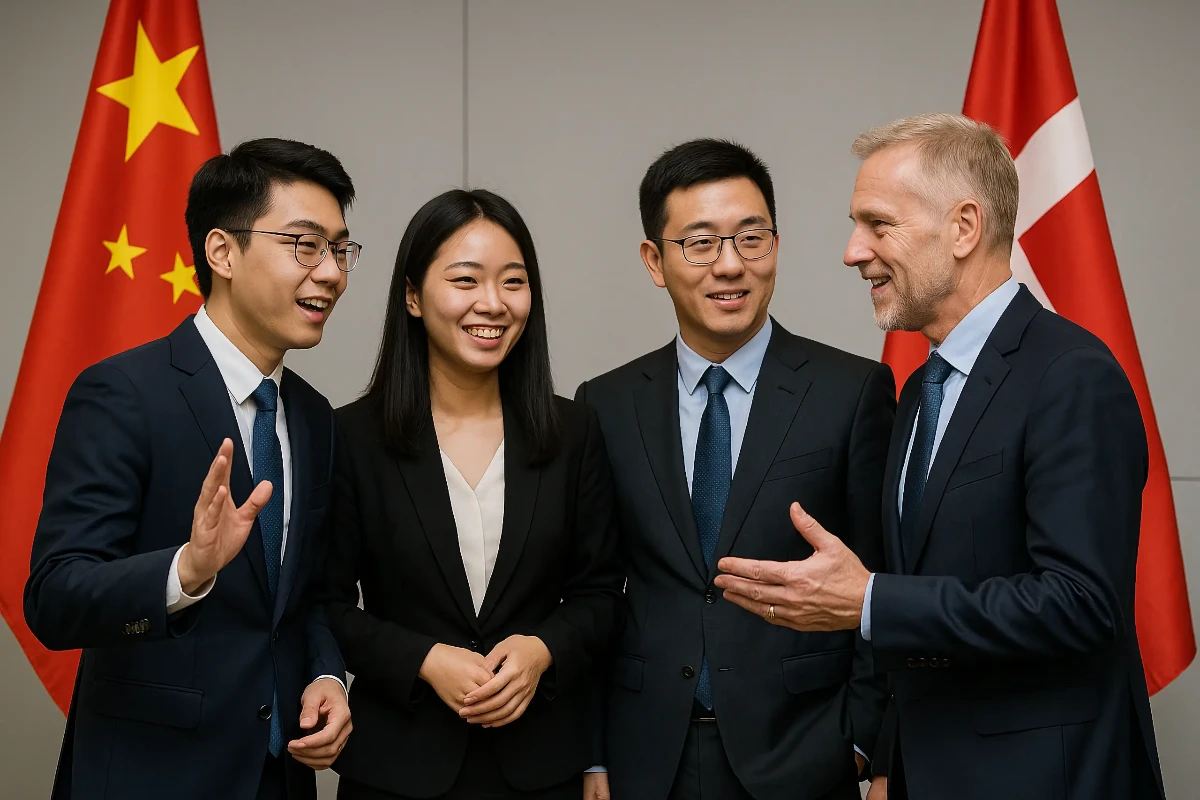
Who you meet in China has changed in the last decade. Not everywhere, and not evenly. But where it has changed, it has changed the terms on which a foreign company gets a hearing.
The old model has not gone. Hierarchical, built on relationships, hard to read from outside, and closed to anyone not inside an established guanxi network. It still exists.
It now sits alongside a newer one. Younger officials and company leaders who work to numbers, understand the technology, were often educated abroad, and will judge your proposition on what it can be shown to do.
Knowing which of the two you are sitting across from, and adjusting, is a commercial skill. It pays.
What has actually changed
The change is generational. It is concentrated in regional and city government, in mid-sized private companies, and in the state bodies that deliver industrial policy.
It does not make relationships unimportant. It changes what makes a relationship productive.
Who these people are
A wave of officials in their thirties and early forties now holds real influence in provincial governments, city investment bureaus and state-linked institutions.
They were formed differently from the people they replaced. Many studied economics, engineering or public policy, often abroad. They have a framework for judging a proposal, and enough international exposure to engage with a foreign business model without a translation layer.
They are not free agents. They still work inside Beijing's direction and still depend on it. But within those limits they will look at a new model, they watch measurable targets more than procedure, and they want visible results for their city.
For you, that has one clear consequence. The business case matters more than it used to.
These people are less dependent on who you know. They want evidence. Show them a specific, checkable improvement - emissions down in their city, a hospital running faster, a yield gain, a cost taken out of an industrial process - and they will engage on the merits.
Brand prestige and European heritage will not do the same work.
Where the shift has happened
Not everywhere. It is strongest in three places.
Technology clusters and smart city pilot zones, where young officials were recruited specifically to run innovation-led government. Export-facing coastal manufacturing hubs, where years of international trade have made negotiation transactional rather than ceremonial. And the administrative bodies delivering the big policy priorities: carbon, digital infrastructure, advanced manufacturing.
It is weakest in sectors run by state-owned enterprises, in inland regions with little exposure to global supply chains, and in institutions whose political job requires following the process rather than delivering an outcome.
So a plan built for Shenzhen or Hangzhou may need serious adjustment for Hebei or Liaoning. What matters is not knowing how Chinese leadership is changing in general. It is knowing which model governs the specific opportunity in front of you.
What changes in practice
Three things.
Evidence beats introductions. The older generation judged foreign companies through relationship networks and reference chains. Younger city and institutional leaders add a technical assessment on top. Arrive with a clear case, reference results someone can check, and real data, and you beat the company that arrives with a brand and a first meeting. The bar is higher. It is also clearer.
New ways in. Younger officials will back a pilot, a phased rollout, or a controlled commercial test. Those routes did not exist under the old model, and they are open in particular to companies with technology that matches China's urban, environmental or industrial priorities. The condition is real joint work and a long-term commitment, not a single technology handover.
Tier 2 and Tier 3 cities matter more. The new generation is concentrated in regional centres, where they have more room to try things than they would in a Tier 1 city with an established order. So Chengdu, Wuhan, Xi'an or Hangzhou may give you a better first engagement than Shanghai or Beijing. Not despite being smaller. Because the decisions are more accessible and more results-driven.
What to do with this
The shift creates real opportunity. It does not make China simpler. It changes what the difficulty is.
Prepare for the old model and you will be lost in a room that runs on numbers. Assume the new model is everywhere and you will be caught out the first time you meet the old one.
So assess the leadership environment as part of your entry work. Who decides, in the specific government, state company or private firm you are targeting? What are they measured on? What kind of proposal helps them hit that, and what kind just adds to their workload?
A plan built for the room you will actually be in beats a plan built for a generic idea of China.
You can test this first
The leadership environment in a specific target market is assessable before you engage with it.
And a bad fit does not mean the market is wrong. It means the sequence is wrong. A different city, a different sector entry point, or a different kind of partner to start with.
That mapping is part of what validation does. Find out how the decisions get made before you build an entry model designed for somewhere else.
Related content

China technology infrastructure opportunities: advantage, constraint, and the strategic question

Export failure rate: why most market entries fail and what changes the outcome

China distribution network: how the channel ecosystem works and how to navigate it

SME China opportunity: what makes the market compelling, and what makes it hard
China local partner: why the entry mode decision is actually a partner dependency decision

Minimum viable presence: how much China do you need before you commit?

Why we are building a Nordic lifestyle store for Tier 2-3 China

China business culture for foreign companies

Do you need a China consultant, or something else?

Why Nordic Lifestyle Centres in China

Why companies fail in the China market

China market structure explained: how B2C, B2B and B2G actually work