Most Nordic SMEs default to Tier 1. We are building in Tier 2 and Tier 3 cities for a reason. For a brand-led Nordic company, a cultural and commercial hub in mid-tier China beats the crowded coastal default. Here is the thinking.
By Niels Boje Lund, Shaeps, updated 2026.09.08
Most Nordic companies think about China in Tier 1 terms. Shanghai, Beijing, Shenzhen, Guangzhou. That is what the literature says, what the trade bodies say, and what the consultancies say.
The result is that they default to the most expensive, most crowded and least typical part of the country.
For most Nordic SMEs, that is the wrong place to start.
We are building Nordic Lifestyle Centres in Tier 2 and Tier 3 cities for a reason. There is a kind of Nordic company - brand-led, culturally distinct, taking a long view - for which a cultural and commercial hub in mid-tier China beats direct Tier 1 entry by a wide margin.
Here is the thinking.
What a Nordic Lifestyle Centre is
A purpose-built cultural and commercial hub in a Chinese Tier 2 or Tier 3 city, developed with the local government.
It gives Nordic companies a physical commercial presence, sitting inside cultural programming, education, retail and community space.
It works as an entry route and as a place to build a brand.
It is built for Nordic companies whose advantage is the brand, the culture or the category. Not for commodity producers competing on price or scale.
Cultural hubs in Tier 2-3 cities
Nordic Lifestyle Centres are purpose-built cultural and commercial hubs located primarily in Tier 2-3 cities - markets with high growth potential, receptive local government, and lower competitive density.
Promote the Nordic brand
The centres promote the Nordic brand through products, technology, education, and cultural assets. For Nordic companies, they provide a physical commercial foothold in China without the cost and complexity of independent market entry.
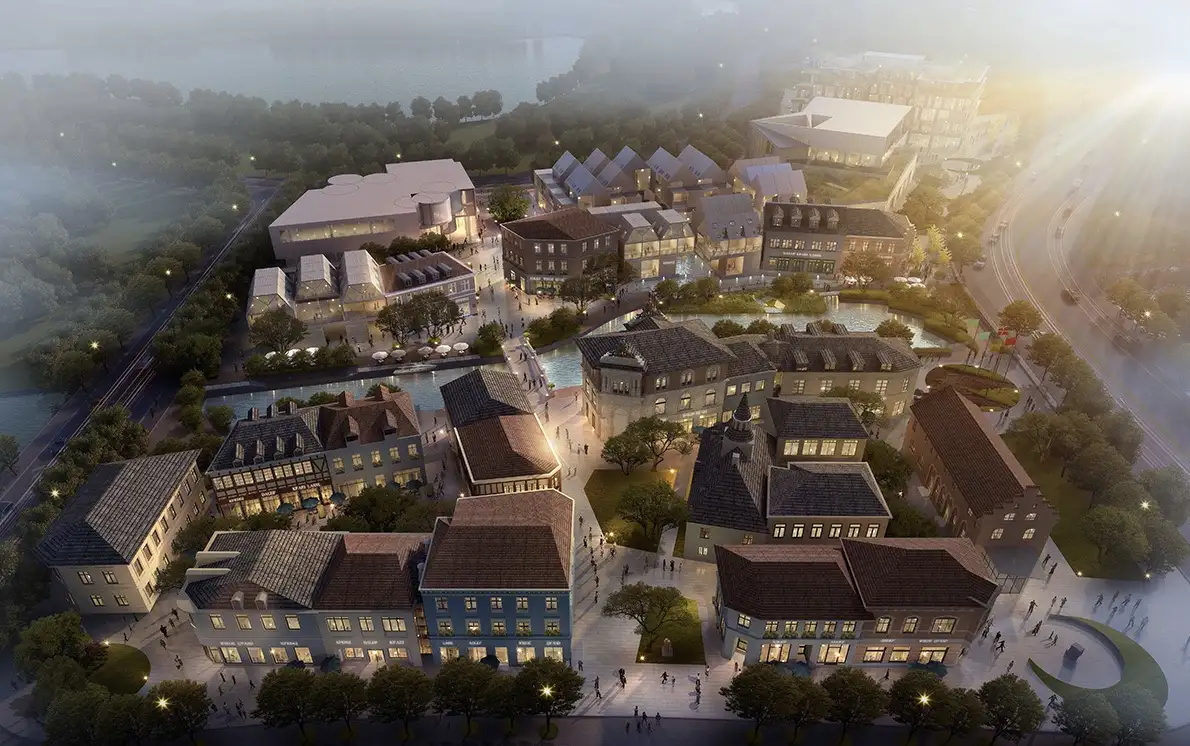
Nordic Lifestyle Centre, Jiaxing
Why Tier 2 and Tier 3 are underpriced
Tier 1 is where the multinationals went in the 1990s and 2000s, when China opened. The infrastructure is there. The consumer market is established. The foreign business community is dense.
That came at a price. Tier 1 is now the most expensive place to operate in China, the most crowded, and the least like the rest of the country.
Tier 2 and Tier 3 cities have grown faster than Tier 1 for more than a decade. The middle class there has expanded a lot. The cost base is far lower. The competition is a fraction of what you meet on the coast.
If your brand works outside the multinational-saturated coastal cities, the demand profile in mid-tier China usually fits you better.
The trade-off is real. Tier 1 gives you the most globally-minded consumers. Tier 2 and Tier 3 give you more growth, less competition, lower cost and a more welcoming local system.
For most Nordic SMEs, the second one fits.
Culture is commercial infrastructure here
Chinese consumers, and especially the rising middle class in mid-tier cities, increasingly choose brands on cultural fit, story and provenance. Not only on price and specification.
That is not unique to China. It is the same shift towards brand-led buying you see in any mature consumer market.
What is different is that the infrastructure supporting it is thinner here than in Europe or North America. Most foreign brands arrive through retail outlets and online platforms that strip the cultural context out.
A cultural and commercial hub puts the product back with the story. The centres combine retail with cultural programming, learning spaces, sustainability education and community space.
What you get is a relationship that builds over several visits and several kinds of contact, rather than a transaction at a till.
For a company whose advantage is design, sustainability, craftsmanship or cultural distinctiveness, that matters. The brand value is built into how people meet you, not added afterwards through marketing.
Experiential retail, exhibition, and cultural activity centres
The Lifestyle Centres with business hubs and parks themed around Nordic culture.
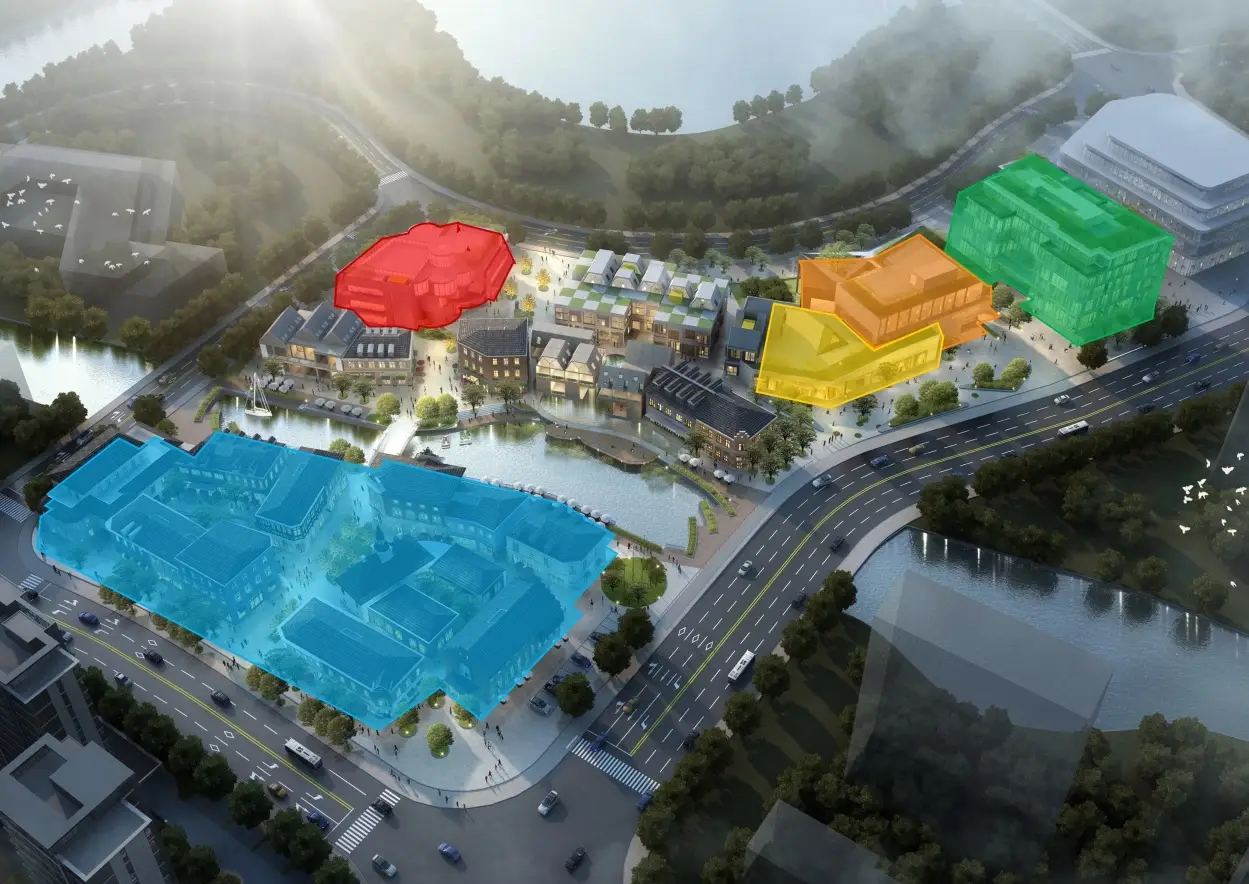
Lifestyle Centre themes
Blue
Retail, incubation and tourism
Includes retail space, business incubators, tourism promotion. Hosts community and business events.
Red
Storytelling
Hosts a museum about Hans Christian Andersen and the 'Tinder Box', a children's cultural centre and a modern fairy tale section.
Yellow
Health
Showcases the benefits of a healthy lifestyle and will consist of recreation, leisure and sports areas where visitors can participate in activities that promote a healthier lifestyle.
Orange
Learning
Includes an innovative children's learning / experience centre based on the principles of 'learning through play' - with music, dance, art and culture.
Green
Sustainability
Provides education on renewable energy, sustainable living, etc. through hands-on and interactive activities.
Local government as a partner
Most Nordic companies think of "the government" in China as a national body to comply with.
In a Tier 2 or Tier 3 city, the government that matters is local. Municipal and provincial authorities responsible for economic development, urban planning and cultural strategy. Their interests are different.
They are actively recruiting foreign investment that fits their development priorities. They offer land, lease terms, tax incentives and infrastructure support for projects that match their goals.
A Nordic Lifestyle Centre brings cultural programming, education and sustainability content alongside commercial activity. That hits several local priorities at once. Economic development. Cultural exchange. Education. And the city's own image.
The centres are built with local government, not against it. The Nordic companies inside them get commercial space, local goodwill, and a community infrastructure that would be slow and expensive to build alone. The local government gets foreign investment, cultural programming and a visible sign of international engagement.
None of that is unique to us. It is how Tier 2 and Tier 3 economic development works across China. The centres just make it usable for Nordic companies.
Who this is for, and who it is not
The centres are built for one kind of company. Nordic SMEs whose advantage is brand-led, culturally distinct or category-defining.
Furniture brands. Design houses. Sustainable lifestyle products. Premium food and drink. Education concepts. Design-led services.
Not commodity producers. Not scale manufacturers. Not B2B industrial suppliers.
The reason is structural. The hub model is supported by local government and cheap real estate, but it only pays back if your value depends on cultural integration.
If your advantage does not rest on culture, story or brand, the model does not cover its costs. If it does, the integrated approach beats fighting for shelf space in a Tier 1 mall.
This is a specific fit, not a general one. We say so plainly, because the wrong company in the right structure ends up worse off than the right company in the wrong one.
Where this sits in our work
The centres do not replace validation. They are an entry route that, for the right company, is more efficient than going into Tier 1 alone.
The discipline still applies. Before you commit to the centre route, the case has to be tested.
Does your brand actually land with the mid-tier consumer? Is the demand real at the price you need? Are you ready to run a business that operates across retail, culture and education at once?
Those are validation questions, whatever structure you use.
The centres do not remove the need to validate. They change the shape of the entry. The same staged approach applies: test first, commit in stages, do not lock in scale before demand is confirmed.
For some validated cases, the centre is the right answer. For others, direct entry is. For some, the answer is no.
What this means for you
If you are brand-led, culturally distinct, and you have a credible case for mid-tier China, the centres are worth considering.
They are not fully built out yet. We are constructing the first ones now, so the way you engage will develop as the network grows.
The logic underneath is durable. Brand-led companies, inside cultural and commercial infrastructure, backed by local government, in mid-tier Chinese cities. That combination is hard to reproduce through the default channels.
If you are a commodity producer, a scale manufacturer or a B2B industrial supplier, this is not your route. Our core entry work covers the structures that fit you.
And if you are considering China at all and want to test the case before you lock in any structure, start with validation.
Related content

Export failure rate: why most market entries fail and what changes the outcome

China distribution network: how the channel ecosystem works and how to navigate it

Minimum viable presence: how much China do you need before you commit?

The China business governance structure
Why Nordic Lifestyle Centres in China

China market structure explained: how B2C, B2B and B2G actually work
SME China opportunity: what makes the market compelling, and what makes it hard

Why companies fail in the China market
China technology infrastructure opportunities: advantage, constraint, and the strategic question

Do you need a China consultant, or something else?

Cultural barriers exporting to China: why they create commercial failure, not just awkward moments

IP protection in China: what foreign companies actually need to do before they enter